
Last updated October 17, 2026
 Metal roofing
 Architectural shingles
 Tile roofing
 GAF
GAF Owens Corning
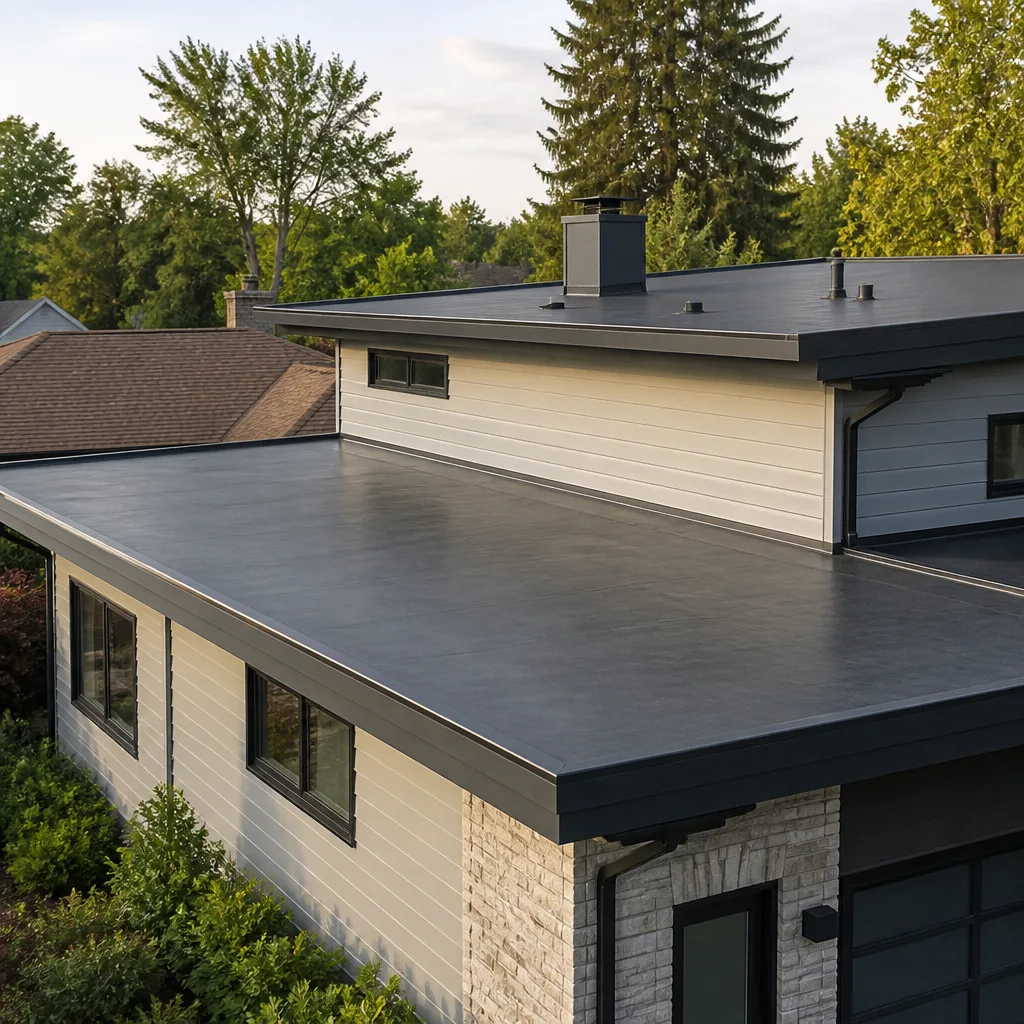 Flat & low-slope
Free roof inspection with deck photos before we talk money - GAF and Owens Corning certified installation
Roofing Warning Signs: A Fort Lauderdale Homeowner’s Reference Guide
Most Fort Lauderdale homeowners spend more time thinking about their air conditioner than their roof, and that’s understandable. The AC runs every day; the roof only makes itself known when something goes wrong. But here’s what two decades of roofing in this city has taught us: the roofs that fail in September almost always showed a quiet warning sign in January. The difference between an $80 flashing repair and a $4,000 interior restoration is rarely expertise. It’s timing. And timing depends entirely on knowing what to look for before the ceiling stain appears. This guide walks you through the six signals that matter in Fort Lauderdale specifically, where salt air, afternoon downpours, and hurricane-season wind gusts create a failure pattern unlike anywhere else in Florida.
Styles & brands we work with
Quick Answer
The most common roofing warning signs in Fort Lauderdale are granule loss visible in downspout discharge, dark ceiling stains that appear after specific weather events, soft spots on flat roof sections, failing flashing at pipe collars and valleys, algae growth that signals trapped moisture, and fascia or soffit rot at the roof edge. Each of these appears months before a full failure, and each can be assessed from the ground or from inside the home without setting foot on the roof. A homeowner who checks for these six signals twice a year will catch most Fort Lauderdale roof problems while they’re still measured in hundreds of dollars instead of thousands.
Table of Contents
- 1. The Pipe Collar Flashing Gap: The $80 Warning Sign Everyone Misses
- 2. How to Read a Ceiling Stain: Color, Shape, and What They Reveal About the Leak Source
- 3. Algae and Moss on a Fort Lauderdale Tile Roof: A Moisture-Retention Signal, Not Just a Cosmetic Issue
- 4. The Granule-Loss Check for Asphalt Shingle Roofs: Reading Your Downspout From the Ground
- 5. Soft Spots on a Flat Roof: What ‘Give’ Underfoot Says About the Decking Below
- 6. Fascia and Soffit Rot: The Roof Edge Detail Most Homeowners Never Inspect
- Common Mistakes to Avoid
- When to Call a Professional
- Frequently Asked Questions
- The Bottom Line
1. The Pipe Collar Flashing Gap: The $80 Warning Sign Everyone Misses
Every roof in Fort Lauderdale has penetrations. Plumbing vent pipes, exhaust vents, and sometimes electrical masts poke through the roof surface, and each one is wrapped in a metal or rubber collar called flashing. The flashing is what keeps water from following the pipe down into your attic. And in Fort Lauderdale’s climate, it fails with remarkable predictability.
What happens is simple: ultraviolet radiation from the sun breaks down the rubber boot around the pipe collar over time. In this city’s heat, a rubber boot typically lasts seven to ten years before it starts to crack. Once cracks form, the boot shrinks. As it shrinks, it pulls away from the pipe, leaving a gap. Often that gap is no more than two inches long and a quarter-inch wide. It looks like nothing. It is not nothing.
Water entering a pipe collar gap doesn’t usually produce a dramatic leak. Instead, it trickles down the outside of the pipe, into the attic insulation, and eventually shows up as a faint outline on the ceiling below. By the time the stain is obvious, water has been traveling that path for weeks or months. The insulation above is saturated. The drywall is compromised. What started as a $80 flashing replacement has become a $4,000 ceiling repair, insulation replacement, and possibly decking remediation.
Here’s the part most guides miss: you can check your pipe collars without getting on the roof. Walk your home with a pair of binoculars. Look at every pipe sticking through the roof surface. If you can see a dark gap between the pipe and the rubber boot, the flashing has begun to fail. If the boot looks cracked, chalky, or pulled away on one side, it’s time. In our experience, we regularly see pipe collar failures in neighborhoods like Victoria Park, Rio Vista, and Coral Ridge that would have been a five-minute fix had they been caught during a routine gutter inspection.
What to Look For, Step by Step
- Count your roof penetrations. From the street or backyard, count every pipe and vent that protrudes through the roof. Most Fort Lauderdale homes have between three and seven. Write down the number so you don’t skip one on a later check.
- Examine each boot with binoculars. Look for cracking visible from the ground, a gap between the boot and the pipe, or a boot that sits crooked on the pipe.
- Check the attic from inside. In the daytime, go into the attic with the lights off. If you can see daylight around any pipe, the flashing gap is already open to the weather.
- Look for rust or water trails on the pipe itself. In the attic, water running down a vent pipe leaves a visible track. Rusty nails, dark streaks, or stained insulation near a penetration all point to the same problem.
This is one place where the economics are hard to argue with. A Roof Repair in Fort Lauderdale for a pipe collar boot runs at the low end of the repair scale, typically well under $200. The alternative, ignoring it, can run into the thousands and often involves interior work that has nothing to do with roofing and everything to do with restoration. If you’re only going to check one thing on this list, make it the pipe collars.
2. How to Read a Ceiling Stain: Color, Shape, and What They Reveal About the Leak Source
Ceiling stains are the most common reason Fort Lauderdale homeowners call a roofing company. But here’s the thing: not every ceiling stain is a roof leak. And the ones that are roof leaks don’t all come from the same place. Before you assume the worst, take a close look at what the stain actually looks like. The color, shape, and timing of a ceiling stain will tell you more than almost any other single piece of evidence.
Brown, rusty, or copper-colored stains almost always mean water is moving through something metal on its way to your ceiling. That metal might be a rusting nail, an old pipe, or a metal flashing detail. In Fort Lauderdale, a brown stain with a defined ring pattern often traces to a nail that has backed out of the roof decking and is now acting as a water conduit into the attic.
Yellow or tan stains with soft, diffuse edges usually indicate chronic, low-volume moisture rather than a sudden leak. Condensation from an air handler in the attic is a frequent cause in South Florida, where attics run hot and humid. If the stain appears near an AC vent, on the ceiling directly below the air handler, or grows slowly over months without ever dripping, suspect condensation before you suspect the roof.
Dark gray or black stains with a distinct outline are the classic roof leak signature. Water arriving from a roof penetration carries dirt, dust, and sometimes bitumen from the roofing material itself. It stains aggressively. If the stain appears after a specific rain event, or if it darkens within hours of rainfall, you’re almost certainly dealing with an active roof leak.
White or chalky stains on a ceiling are usually mineral deposits left behind after water evaporates. They indicate a leak that has been active on and off for a long time, often around a chimney, a skylight, or a flat roof section that ponds water. Mineral residue means the water has been moving through building materials long enough to dissolve and redeposit minerals.
Shape Matters: A Field Guide
- Ring-shaped stains (a circle with a lighter center) indicate water pooling around a single drip point, often a nail or a small crack. The leak source is localized, and the repair is usually small.
- Linear stains that follow a seam or crack in the ceiling suggest a longer, wider water path above. On a drywall seam, water from a roof leak often travels along the seam line, showing you the path it takes but not necessarily the source.
- Blotchy or irregular stains that spread across a broad area indicate saturation, not just a drip. By the time a stain has spread six or eight inches in multiple directions, the insulation above is wet and the decking may be as well.
Here is the practical takeaway for Fort Lauderdale homeowners: when you see a new stain, note where it appears and what the weather was doing in the 24 hours before you noticed it. Check the attic above the stain with a flashlight. If you find wet insulation, you’ve found the roof leak location and you know it’s active. If the insulation is dry, the stain may be residual from an old leak, or the source may be condensation. Either way, a Roofing Company in Fort Lauderdale can trace the path with an infrared moisture meter in less time than you might expect, and for a homeowner who has been burned by a repair that failed within months, the written guarantee on every repair is the part that matters most.
3. Algae and Moss on a Fort Lauderdale Tile Roof: A Moisture-Retention Signal, Not Just a Cosmetic Issue
In Fort Lauderdale, anything on a roof that stays wet longer than it should is a problem. That’s the entire lesson of this section. Most homeowners look at a dark-streaked roof and think of it as a cosmetic issue, something to be pressure-washed and forgotten. But algae and moss on a tile roof are communicating information about how that roof sheds water, and ignoring the message is expensive.
Algae, specifically the blue-green variety that produces the black streaks most often seen on asphalt shingles, feeds on the limestone filler in shingles and thrives in the humid, shaded microclimate of a South Florida roof. The streaks appear first on the north-facing slopes and under tree canopy, where moisture persists longest after rain. In and of itself, algae on asphalt shingles is not structural. But it tells you that the roof slope holds moisture, and in Fort Lauderdale’s humidity, a roof that holds moisture breeds more than algae. It breeds rot in the decking beneath the shingles over time.
On tile roofs, the dynamic is different. Barrel tiles and flat tiles shed water well on their exposed surfaces, but they intercept water on their undersides. When moss or algae grows between the tiles, around the tile laps, or at the tile edges, it means water is sitting in those joints longer than it should. On a healthy tile roof, the interlocking channels move water quickly. When moss establishes itself in the channels, the water slows down, and the mortar or underlayment beneath begins to hold moisture. Left alone, this process degrades the underlayment, which on a Fort Lauderdale tile roof is the actual waterproof membrane. The tile is the UV shield; the underlayment is the raincoat. When moss tells you the underlayment is staying wet, the raincoat is failing.
How to assess it from the ground:
- Look at tile edges and laps, not just the broad roof plane. Moss at the tile overlaps is the warning sign. Moss on the exposed tile face is more nuisance than signal.
- Compare shaded and sunny slopes. If the sunny slope is clean and the shaded slope is covered in moss, the issue is likely tree canopy and persistent shade. The roof is not draining poorly; it’s simply not drying. Trimming branches is the first move, not a new roof.
- Check the valleys and eaves. If moss is thick in valleys or at the bottom edge of tile courses, water is pooling or traveling slowly there. Valleys that hold water on a Fort Lauderdale home are a genuine leak risk in a hurricane, when wind-driven rain overwhelms the slow path.
- Inspect the underside of tile edges where accessible. At the eaves, look up from a ladder (or from the ground with binoculars) at the tile edges. If you see dark, wet-looking patches on the underside of the tile, the moisture retention is active, not just historical.
In our experience across Fort Lauderdale neighborhoods like Sailboat Bend, Shady Banks, and Riverside Park, tree canopy and roof algae go hand in hand. The fix is usually not a roof replacement. It’s tree work, gutter cleaning, and sometimes a new underlayment. But the signal, once read, tells you exactly where the roof’s drainage is compromised. That’s information worth having before hurricane season, not after.
4. The Granule-Loss Check for Asphalt Shingle Roofs: Reading Your Downspout From the Ground
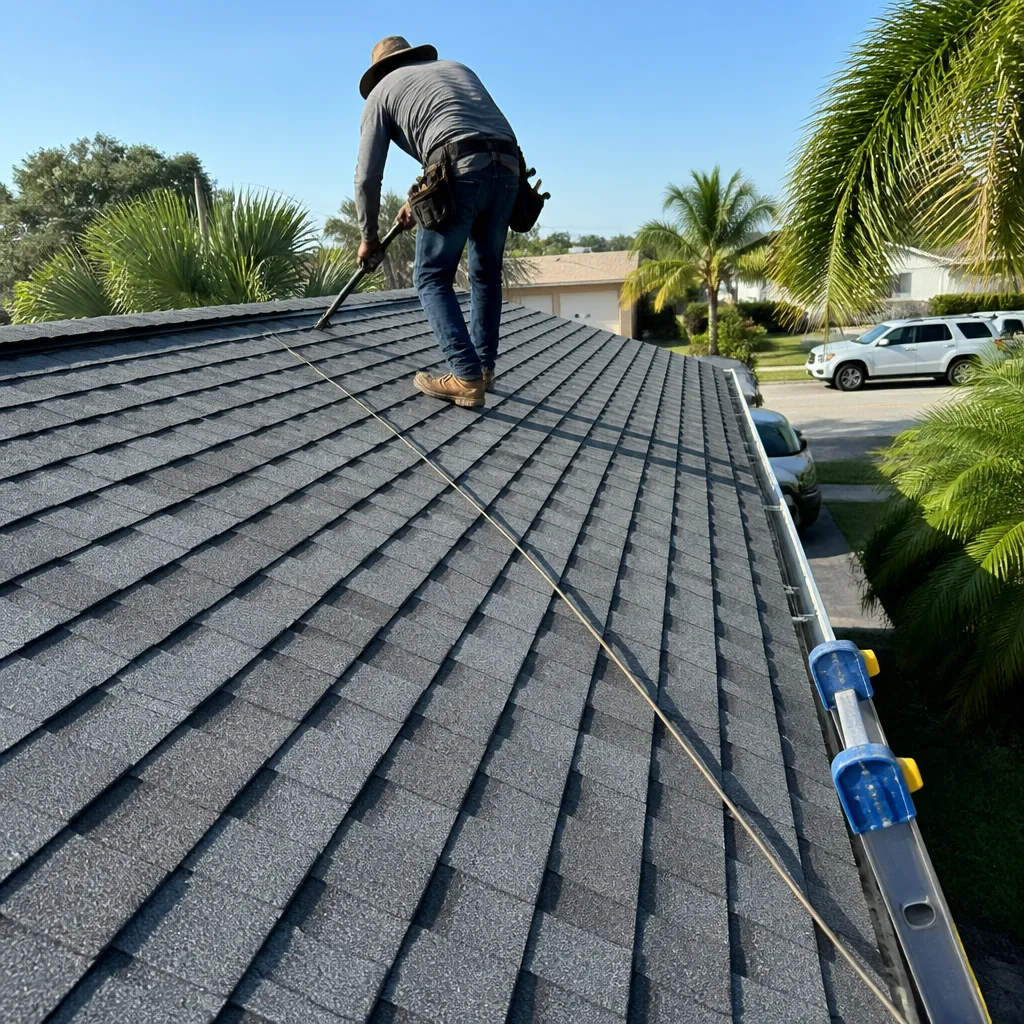
Asphalt shingles fail from the top down, not the bottom up. The granules embedded in the shingle surface are not decorative; they are the shingle’s UV shield and impact armor. When granules loosen and wash away, the asphalt beneath is exposed to sunlight, and sunlight is what destroys asphalt shingles in South Florida. But you do not need a ladder or a roof walk to measure granule loss. Your downspouts will tell you, if you know how to read them.
Here’s the method. After a dry spell of at least three or four days, during the next afternoon rainstorm, go outside with a flashlight and look at the discharge from your downspouts. If the water running out carries a visible load of dark granules, your shingles are actively shedding. If you see a crescent of granules deposited on the grass or pavers where the downspout empties, the loss has been ongoing. A healthy asphalt shingle roof loses a small, immeasurable amount of granules in its first year and almost none thereafter. An aging roof loses granules by the cup, and the downspout discharge looks like black sand.
The catch basin test, which requires no rain: If you want to check on a dry day, look inside your gutters at the downspout openings. Granules are heavier than water and they settle in the gutter seams, the corners, and the downspout mouths. Use a small mirror or your phone camera on a stick if you don’t want to climb a ladder. If the gutter bottom is coated in granules, they didn’t get there by accident. They washed off the shingles.
Why this matters in Fort Lauderdale specifically: our rain is intense and seasonal. A ten-minute afternoon thunderstorm can move more water across a roof than a week of steady rain elsewhere. That intensity accelerates granule loss on any shingle that has begun to fail. The shingles from manufacturers like Owens Corning, IKO, and Atlas are engineered to hold their granules under exactly these conditions, but no shingle lasts forever. In this climate, granule loss in the downspout is the earliest measurable sign that the asphalt layer is oxidizing and the shingle is entering its final third of its service life.
What do you do with this information? If granule loss is minor and the roof is under ten years old, document it and check again in six months. If granule loss is heavy, or if the roof is over fifteen years old, schedule a professional assessment before hurricane season. A Roof Replacement in Fort Lauderdale is a significant decision, but it’s a decision best made on your schedule, with written pricing in hand, not in the week after a storm when demand is high and choices are thin.
5. Soft Spots on a Flat Roof: What ‘Give’ Underfoot Says About the Decking Below
Many Fort Lauderdale homes, especially mid-century builds in neighborhoods like Poinsettia Heights, Middle River Terrace, and Croissant Park, have flat or low-slope roof sections over porches, carports, or additions. These roofs are built on a deck, usually plywood or tongue-and-groove lumber, with a membrane above. The membrane is the waterproof layer. The deck is the structural layer. A soft spot on a flat roof means the deck is losing its structural integrity. It’s the single most serious warning sign in this entire guide, and it’s the one homeowners are most likely to discover by accident.
Here’s how it works. A flat roof membrane can look intact and still have failed. A seam can separate microscopically, a flashing detail can pull away by an eighth of an inch, and water gets underneath the membrane. Once water is trapped between the membrane and the deck, it has nowhere to go. The deck absorbs it. Plywood delaminates. Lumber rots. And the first symptom the homeowner notices is not a leak; it’s a springy, giving feeling underfoot the next time someone walks the roof to clear a gutter or hang holiday lights.
What to feel for:
- Spongy give underfoot, like walking on a firm mattress. Waterlogged decking compresses slightly under weight. That is the defining symptom of trapped moisture beneath the membrane.
- A localized bounce. If one two-foot square area yields more than the surrounding surface, the deck has failed in that spot, not generally. The membrane above may look unremarkable.
- A creaking or cracking sound. Rotting plywood makes noise under load before it breaks through. A crackle underfoot is the deck telling you it’s compromised.
- Visible deflection from the ground. If a flat roof sags in the middle or dips between supports, the deck has lost its capacity and is holding water in the low spot, which accelerates the rot.
If you feel a soft spot, mark it. Do not walk on it repeatedly. Do not attempt a DIY patch over it; sealing a membrane over a failed deck does nothing for the structural layer beneath and will fail again, often within months. The repair is to cut out the membrane in that area, replace the damaged decking, and install new membrane, sealing it into the existing system. That is professional work, and in Fort Lauderdale, where a flat roof that holds water invites mosquito breeding as readily as it invites rot, the decking condition is often what determines whether a repair makes sense or whether a replacement is the better financial call.
6. Fascia and Soffit Rot: The Roof Edge Detail Most Homeowners Never Inspect
Walk outside and look up at the edge of your roof. The board you see along the top of the wall, the one the gutters are fastened to, is the fascia. The flat, often vented surface that runs from the fascia back to the exterior wall is the soffit. Together, they close the gap between the roof edge and the house, and together, they are the most neglected inspection point on a Fort Lauderdale home.
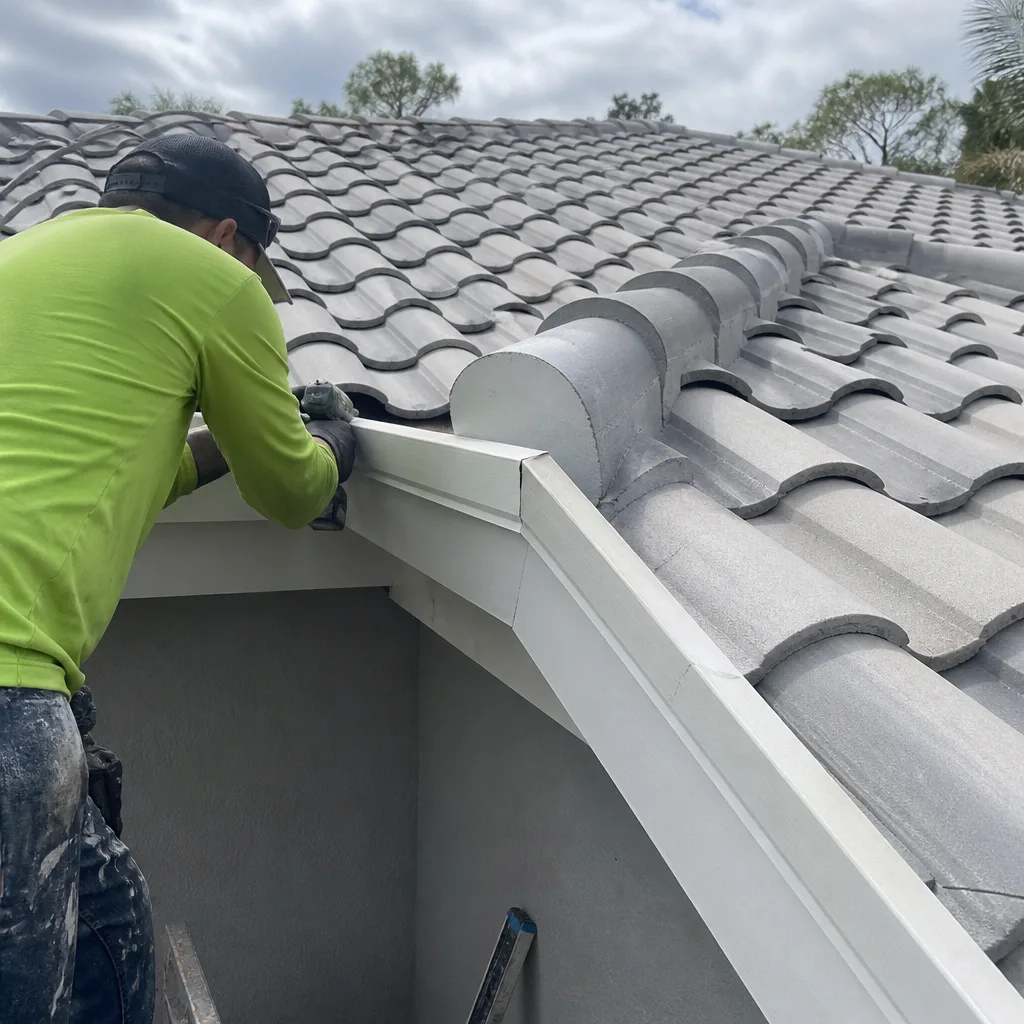
Fascia and soffit boards rot from water that should have been shed by the roof edge. The primary mechanism is failure at the drip edge, the metal strip that runs along the roof margin and directs water off the roof face and into the gutter. When the drip edge is missing, undersized, or pulled away, water wicks backward along the underside of the shingle or tile and runs down the fascia. Over time, that water rots the wood. The soffit rots from below when gutters overflow, or from above when attic ventilation is poor and condensation runs down the inside face.
Here’s why this matters in Fort Lauderdale: fascia and soffit rot is the symptom of a roof edge detail that has been failing for months, not days. By the time you see paint peeling on the fascia, cracking on the soffit, or dark staining at the corners, the underlying wood has been wet for a long stretch. If you tap the fascia with the butt of a screwdriver and it sounds hollow or soft, the rot is advanced. If you can press a key into the wood fibers, the board is structurally done.
What to inspect, in order:
- The drip edge. From the side of the house, look along the roof margin. The drip edge should be continuous, angled outward, and free of rust or pull-away. Gaps between the drip edge and the fascia allow water to run behind the gutter.
- The gutter joint line. Where gutters attach to the fascia, look for rust stains, dark streaks, or water trails running down from the fasteners. Each one indicates water is escaping the gutter system at the attachment point.
- The soffit venting. Soffit vents should be clean and dry. If they are clogged with dust, or if you see moisture staining around them, the attic may not be venting properly, and the soffit is on its way to rot from the inside.
- The corners. Water concentrates at the roof corners, and fascia rot almost always starts at the corners of a house, where the gutter system turns and the drip edge detail is most likely to be imperfect.
Fascia repair is roofing-adjacent work, but it’s part of what a Roofing Company in Fort Lauderdale addresses on a daily basis. The cost is modest compared to what happens if the rot spreads into the rafter tails, which is possible when the fascia has been wet for a year or more. The Kingswell Way applies here as much as on a full Roof Replacement in Fort Lauderdale: a written price before any work starts, and a written guarantee on the repair before the crew leaves.
Common Mistakes to Avoid
- Waiting for the ceiling stain before investigating anything. By the time water reaches the ceiling, it has traveled through the roof surface, the decking, and the attic insulation. The damage below the roof is already done. Every check in this guide is designed to catch the problem before the stain appears.
- Assuming a tile roof never needs maintenance. Tile roofs in Fort Lauderdale last longer than asphalt shingle roofs, but the underlayment beneath the tile has a life span of its own, often twenty to thirty years. When the underlayment fails, the tile may still look fine from the street. The leak is active, and the tile is doing nothing to stop it.
- Painting over water stains and calling it fixed. A primed and painted ceiling stain means the interior looks fine and the roof is still leaking. The stain will return, and it will bring the same moisture problem with it. Fix the roof first, then the ceiling.
- Pressure-washing algae off a shingle roof. A pressure washer strips granules from asphalt shingles and blasts mortar from tile joints. It creates the very damage it’s meant to clean. Soft washing with the appropriate chemicals is the only correct method, and it’s work best left to professionals who do it without forcing water under the shingles.
- Relying on the builder’s original flashing. New construction flashing in South Florida is often an entry-level material. The boots around pipe collars especially are frequently the cheapest available, and they begin failing at the seven to ten year mark. If your home is nearing that age, assume the original flashing is the weakest point in the roof system.
- Walking a tile roof without knowing how. Tile roofs require traffic patterns on the tile crowns, not the hollows. Walking the flat sections of clay tile will crack them. Most inspections can be completed from the ground with binoculars, from the attic, or from a ladder at the eaves. If the roof must be walked, hire someone who does it daily.
- Ignoring a roof problem because hurricane season is months away. Fort Lauderdale’s roof problems do not wait for November. A small flashing gap in March becomes a saturated attic in June and a flooded ceiling in September. The time to fix a roof is always before the storm, never during cleanup.
When to Call a Professional
Some roof checks are safe for a homeowner with binoculars and a flashlight. Others are not. If you see any of the following, stop the DIY assessment and call a roofing professional: water actively dripping from a ceiling during rain; a soft spot on any roof surface you walk; daylight visible through the roof deck in the attic; granules coating your gutters on a roof over fifteen years old; moss between tile laps that has been present for more than one season; or fascia wood that yields to a screwdriver press. Each of these indicates a problem that is advancing and that requires both a trained eye and the right repair method. High access work and roof walks on tile or steep slopes carry genuine risk, and a fall from a roof is a life-changing injury. We say this because we mean it: call someone who does this every day. Tilehurst Roofing Fort Lauderdale offers free estimates on every inspection in Fort Lauderdale. Call (754) 732-9325 and a live person answers, 24 hours a day, 7 days a week.
Frequently Asked Questions
The earliest warning signs in Fort Lauderdale are granule loss visible in gutter discharge, a gap between the pipe boot and the vent pipe at roof penetrations, algae or moss between tile laps, soft spots on flat roof sections, and dark ceiling stains that appear after rain. If you see any of these, a free estimate from a Roof Repair in Fort Lauderdale professional will tell you whether the issue is currently urgent or can be monitored. Call (754) 732-9325 for a no-cost assessment.
Most roofing companies in Fort Lauderdale, including Tilehurst Roofing, offer roof inspections at no charge, particularly when the inspection is the first step toward a written estimate for repair or replacement. The value of an inspection is in the written findings; a good inspector will tell you what’s wrong, what’s likely to go wrong in the next one to two years, and what the repair would cost before you commit to anything.
In Fort Lauderdale, a roof leak can take weeks or months to reach the interior ceiling, especially if the water is being absorbed by attic insulation before it saturates through. Small leaks at flashing details often travel slowly along rafters and only become visible after enough water has accumulated to soak the drywall. By the time a stain appears, the leak has usually been active for some time.
In Fort Lauderdale, algae on a roof means the roof surface is staying wet longer than it should. On asphalt shingles, algae is mostly cosmetic but signals that the area holds moisture. On tile roofs, algae between the tiles signals that water is pooling in the laps and channels, which can degrade the underlayment. The first step is usually trimming overhanging branches and cleaning gutters, followed by a professional assessment of the underlayment if the algae has been present for more than a season.
Granule loss does not automatically mean a new roof is needed. Mild granule loss on a roof under ten years old may be normal early wear, especially after a heavy rain season. Heavy granule loss on an older roof, or granule loss accompanied by curling shingles and cracked shingle edges, usually indicates the shingle surface is degrading and replacement should be considered. A professional assessment will tell you where on the spectrum your roof falls, with a written price for whatever is recommended.
Yes. Tilehurst Roofing Fort Lauderdale offers free estimates on every roof inspection, every repair, and every replacement. The estimate is written, the price on the page is the price you pay, and every repair carries a written guarantee, backed by the 365-Day Done Right Promise. Call (754) 732-9325 and a live person will answer, day or night.
The Bottom Line
The roof over your Fort Lauderdale home is a system, not a surface. It talks to you through its gutters, its edges, its pipe collars, and its ceilings, and the messages are clear if you know how to read them. The six signs in this guide – the pipe collar gap, the ceiling stain, the algae patch, the granule load, the soft spot, and the fascia rot – all share one trait: they appear months before the emergency. Checking for them twice a year, once before hurricane season and once after, will catch most problems at the repair stage, not the replacement stage. And when you find something, call a professional who puts the price in writing before the work begins and the guarantee in writing before the crew leaves. That’s how a roof should be maintained in Fort Lauderdale, and it’s how Tilehurst Roofing Fort Lauderdale does it.
Written by Greg Holloway, Owner at Tilehurst Roofing Fort Lauderdale, serving Fort Lauderdale since 2000.
See the difference
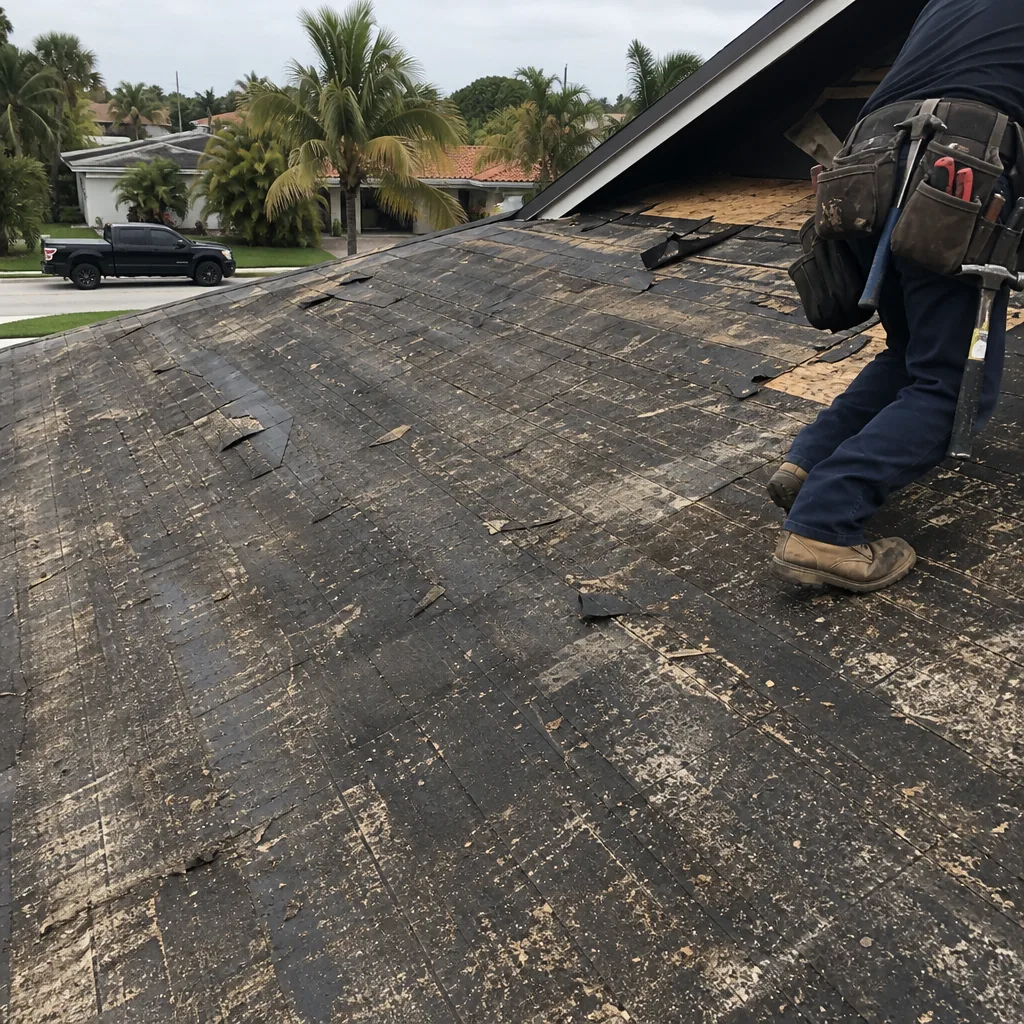 Before
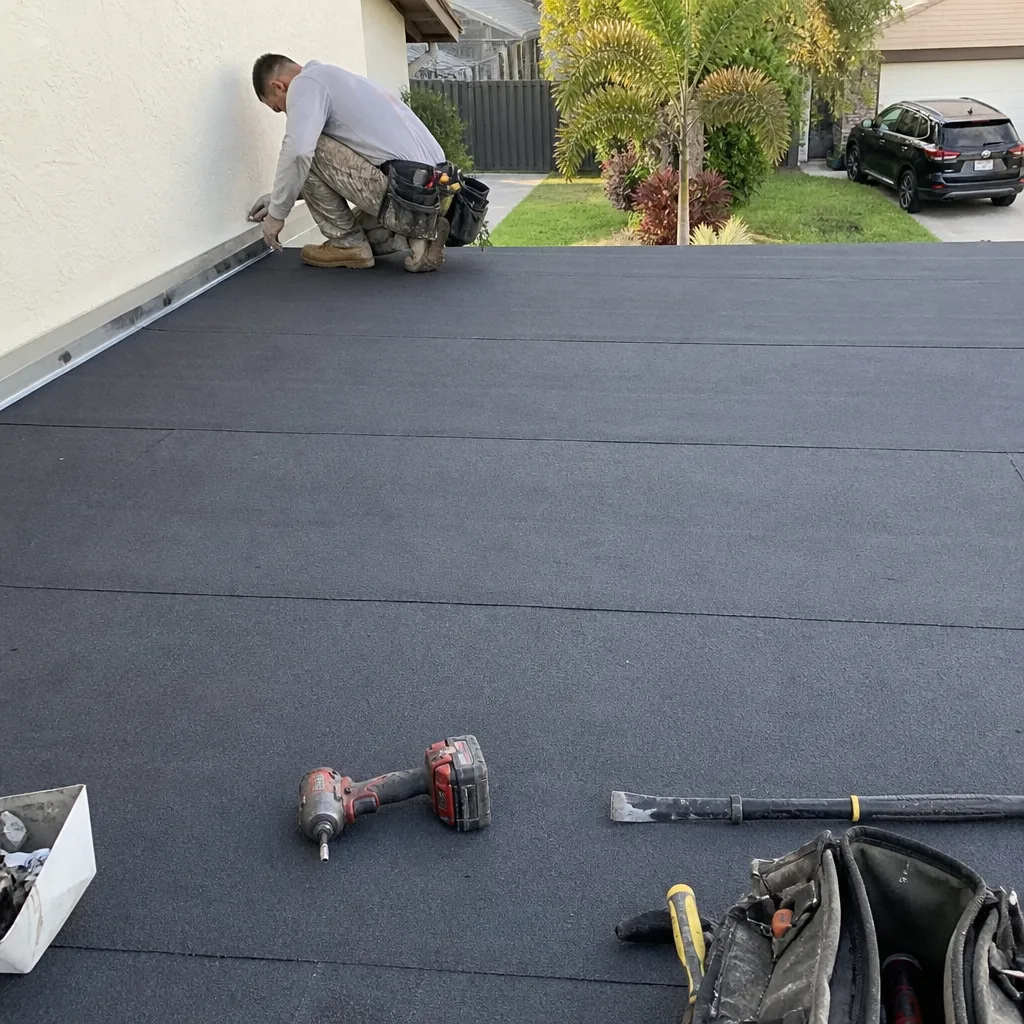 After
After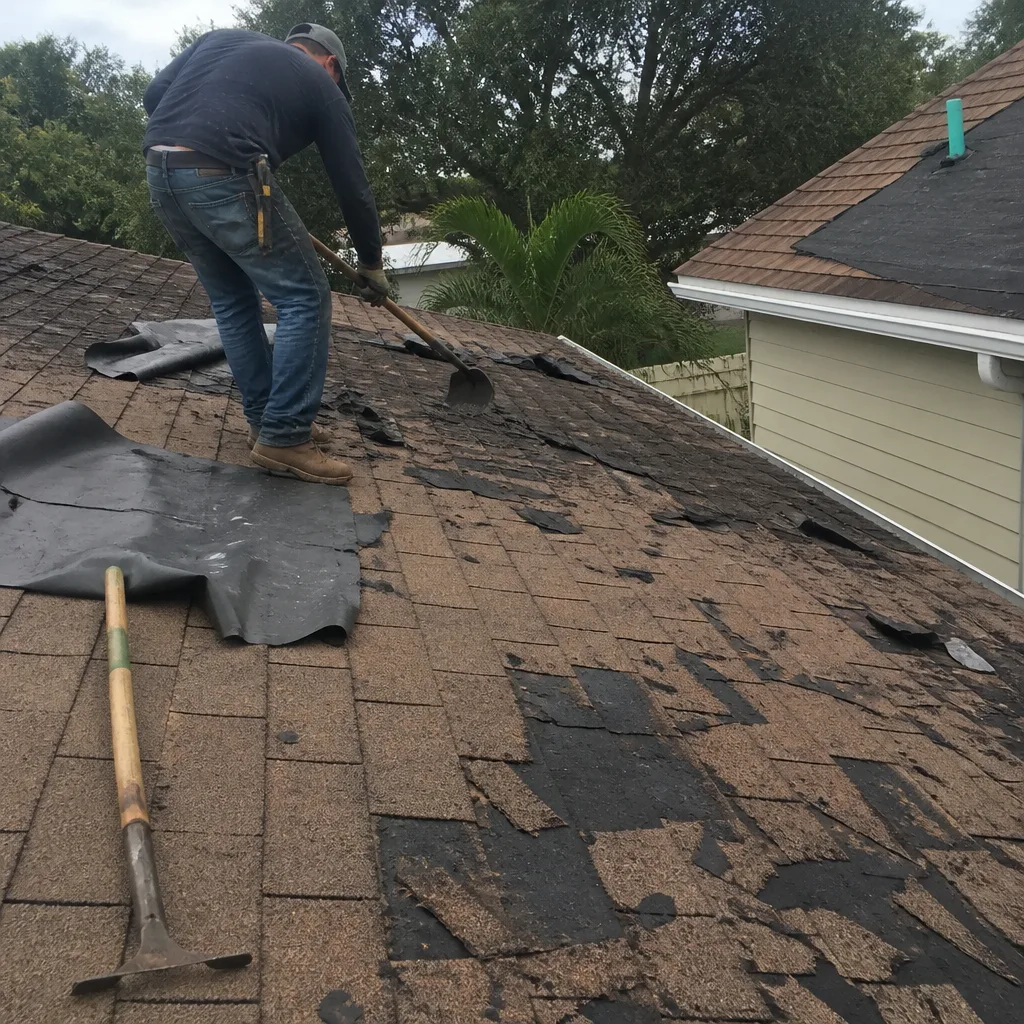 Before
 After
After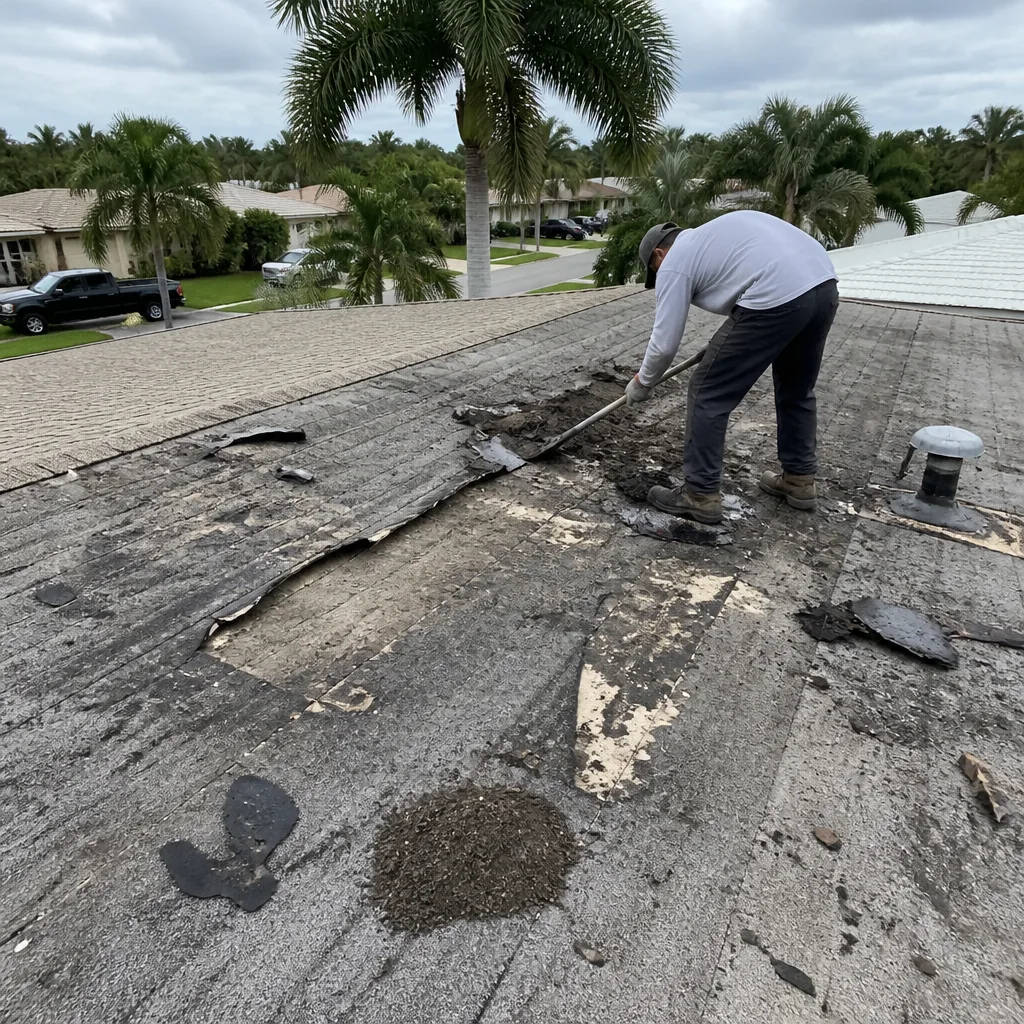 Before
 After
After