
Last updated October 17, 2026
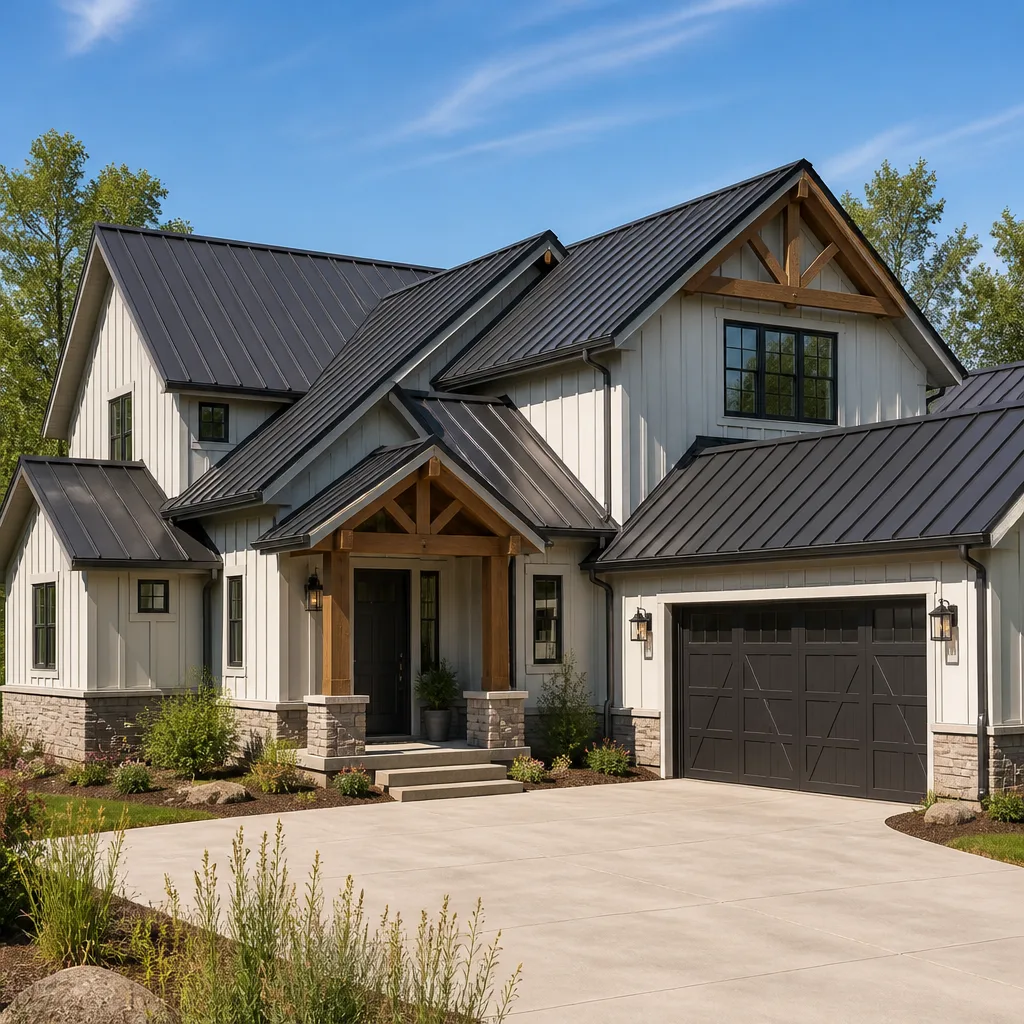 Metal roofing
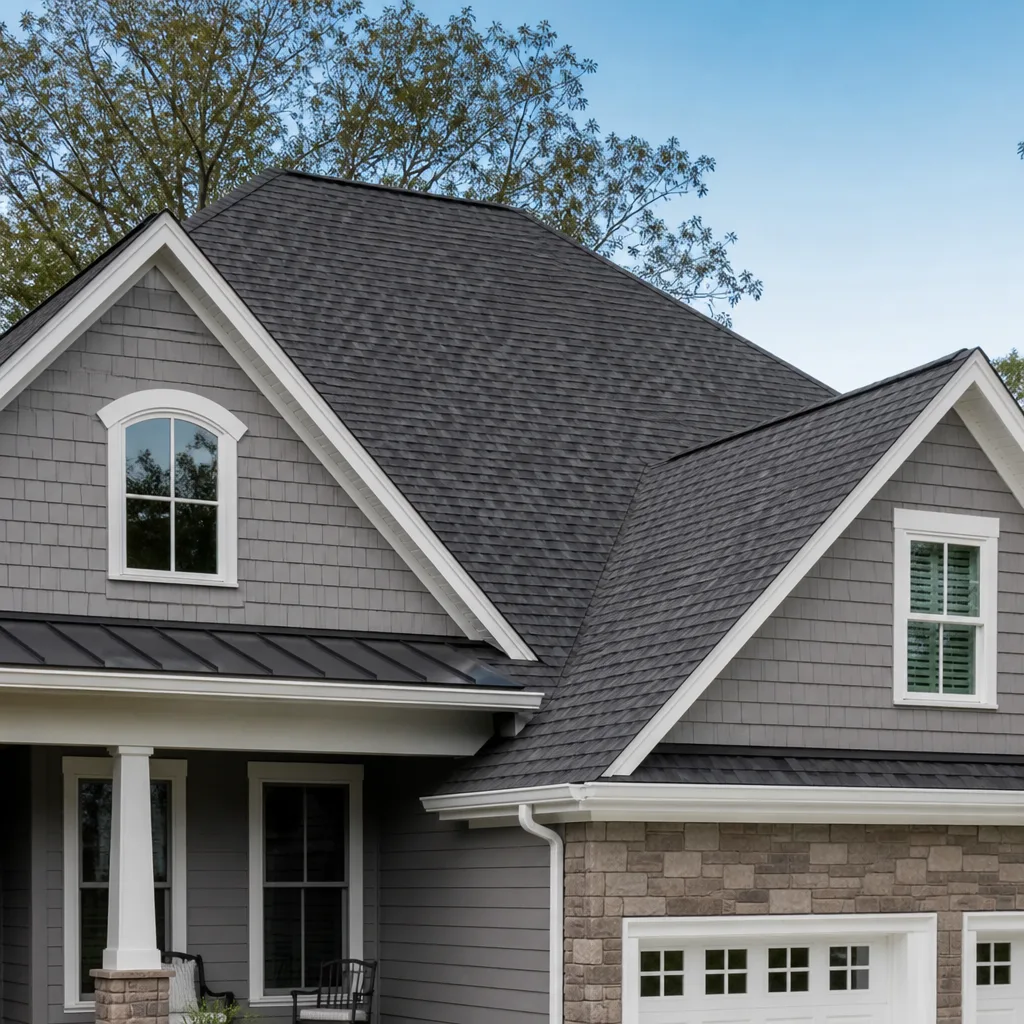 Architectural shingles
 Tile roofing
 GAF
GAF Owens Corning
 Flat & low-slope
Free roof inspection with deck photos before we talk money - GAF and Owens Corning certified installation
Roofing Permits, Codes & Inspections in FL: What You Need to Know
A Fort Lauderdale homeowner discovered at closing that the roof replacement they’d paid for three years earlier was never permitted. The buyer’s lender walked. The seller had to fund a full re-roof, with permits this time, just to close the sale. That’s the reality of Florida roofing permits: they’re not paperwork theater. They’re the document trail that proves your roof was built to code, keeps your insurance valid, and lets you sell without a financial gut punch. This guide walks you through exactly how permits, codes, and inspections work in Broward County: which jobs need them, how to verify your contractor actually pulled one, what the 8th Edition Florida Building Code changed, and why that final inspection sign-off belongs with your deed. For a broader look at roofing in this region, see The Complete Guide to Roofing in Fort Lauderdale. If you’ve been burned before, this is the guide that keeps it from happening twice.
Quick Answer
Most residential roofing work in Fort Lauderdale and across Broward County requires a building permit, including full roof replacements, re-roofs over existing shingles in certain conditions, and any job that touches the roof decking or structural framing. The permit triggers mandatory inspections at set stages; without a final inspection sign-off, your roof is legally unpermitted work. That can void a homeowner’s insurance claim and stall or kill a home sale years later. Verifying a permit takes about five minutes on Broward County’s online portal, and the cost of a roofing permit in Broward typically runs between $150 and $400 depending on the job’s value and scope.
Styles & brands we work with
Table of Contents
- Florida’s 25% Roof Rule: What It Is and When It Requires a Permit
- Which Broward County Roofing Jobs Require a Permit vs. Just an Inspection
- How to Verify Your Contractor Pulled a Permit Before Work Starts
- How Much Do Roofing Permits Cost in Fort Lauderdale and Broward County?
- The Insurance Consequences of Unpermitted Roofing Work
- What a Final Inspection Sign-Off Looks Like and Why It Belongs With Your Deed
- What Florida’s 8th Edition Building Code Changed for Re-Roofing
- What to Do If a Contractor Tells You Permits Aren’t Necessary
Florida’s 25% Roof Rule: What It Is and When It Requires a Permit
The 25% rule is the single most misunderstood number in Florida roofing. Here’s the plain-language version: if you’re repairing a roof and the damaged area is less than 25% of the total roof surface in any 12-month period, Florida code treats it as a repair, not a re-roof. A repair typically doesn’t require a full re-roof permit, though the work still has to meet code. Cross 25%, and the code considers the entire roof a replacement project. At that point, the permitting requirements shift: the whole roof, not just the patched section, must comply with current Florida Building Code requirements for the roof system as installed.
The nuance that catches Fort Lauderdale homeowners off guard: the 25% counts the roof area being worked on, not the area that’s visibly damaged. If your roofer removes shingles in several scattered sections and the combined area crosses that threshold, you’re in re-roof territory. We’ve seen situations in older Fort Lauderdale neighborhoods like Victoria Park and Coral Ridge where a homeowner planned for a “simple repair” and the accumulated scope tipped into a permitted re-roof because of the way the areas connected. A responsible contractor checks the square footage math before any tear-off starts, not after.
The 12-month rolling window matters too. If you had a patch done in January and another significant repair in July, those areas combine for the 25% calculation. That’s not a contractor being difficult when they flag it. That’s a contractor reading the code correctly and keeping your roof legally clean. When we install materials from manufacturers like GAF or CertainTeed, we’re also matching the manufacturer’s installation specs to the code requirements, because a warranty claim later depends on both. For year-round maintenance tips, see our Seasonal Roofing Care for Fort Lauderdale: Year-Round Homeowner’s Guide.
Bottom line: if anyone tells you the 25% rule doesn’t matter in Broward County, walk away. It’s enforced, and the consequence of misjudging it lands on the property owner, not the installer.
Which Broward County Roofing Jobs Require a Permit vs. Just an Inspection
Here’s the threshold most Fort Lauderdale homeowners never get told: nearly every roofing job that changes the roof’s physical structure or water-shedding surface requires a permit. The question isn’t really “permit or no permit” for anything beyond a minor patch. It’s “which permit type and which inspections.” Understanding the line is what separates legitimate contractors from the ones who skip the paperwork to look cheaper.
Jobs that require a Broward County roofing permit:
- Full roof replacement (tear-off to deck and re-cover): every time, no exceptions.
- Re-roof over an existing single layer: permitted, and Broward County code imposes specific conditions about the existing layer’s integrity and the roof’s total design load.
- Any repair that opens the roof decking: if plywood or OSB comes up, the structural inspection clock starts.
- Replacement of roof sheathing or decking beyond a minor section: because the structure now has new load-bearing material that an inspector must verify.
- Changes to roof slope, height, or drainage configuration: adding crickets, changing the ridge line, re-framing a section.
- Skylight installation or replacement that cuts the roof deck.
- Solar panel installation on the roof: the roof’s capacity to carry the load gets reviewed.
Jobs that may qualify as repairs (no full re-roof permit, but still code-compliant):
- Localized shingle replacement under the 25% threshold with no decking exposure.
- Flashing repair or replacement around a chimney, vent, or valley that doesn’t disturb the roof deck.
- Small leak patches where the underlayment is refreshed in a contained area.
- Ridge cap replacement for damaged caps without touching the field shingles.
The distinction that matters in Fort Lauderdale: even “repair” work must still meet current code for the materials and methods used. And if a repair is done wrong, the next inspector who sees that roof during a future re-roof will flag the area and require correction before signing off. Unpermitted patch jobs have a way of becoming expensive discovered secrets. If the repair involves any of our roof repair services in Fort Lauderdale, we still document the scope and keep a written record of what was done and why, because that record is what a future buyer or inspector will ask for.
How to Verify Your Contractor Pulled a Permit Before Work Starts
This is the step most homeowners skip because they trust the handshake. Here’s the process, in sequence, using Broward County’s online resources. It takes about ten minutes, and it’s the difference between a documented roof and a three-year-later closing disaster.
- Ask for the permit number before materials arrive. A licensed contractor submits the permit application through the Broward County Building Code Division or the municipality’s building department if your home is in a city like Fort Lauderdale that handles its own permitting. The permit number is issued before work starts. If the contractor says “we’ll pull it after,” stop. The permit must be issued before the first shingle comes off.
- Go to the Broward County ePermits portal or the Fort Lauderdale Building Services online system (Fort Lauderdale has its own permitting office). Search by the property address or the permit number. You should see the permit listed with a status of “issued” or “active,” showing the contractor’s name, the scope of work, and the valuation.
- Check the contractor and license match. The name on the permit must match the company you’re paying. Not a sub, not a “friend who handles the paperwork.” The licensed contractor of record is the one responsible for the work and the inspections.
- Confirm the scope matches your contract. The permit description should say “roof replacement” or “re-roof” or “roof repair” consistent with what you signed. A permit that says “minor repair” when you’re paying for a full replacement is a red flag the size of Fort Lauderdale beach.
- Set expectations for inspection scheduling. Ask who schedules each inspection (the contractor does) and at what stages. Write down the expected inspection points: decking/nailing inspection before underlayment, in-progress or “dry-in” inspection, and final inspection. Each must be requested and passed before the next is scheduled.
When we manage a roof replacement in Fort Lauderdale, we give the homeowner the permit number at the first site visit where the scope is confirmed, not after the crew starts. That’s a Kingswell standard. If a homeowner wants to check the permit status, we point them to the portal and tell them exactly what they should see. The Kingswell Way includes a simple rule: the written price comes first, the permit comes second, and the work starts third. If any contractor reverses that order, you’re gambling.
How Much Do Roofing Permits Cost in Fort Lauderdale and Broward County?
Roofing permit costs in Fort Lauderdale and Broward County are formula-driven, not flat. The fee is based primarily on the job’s valuation, which is the total contract price including labor and materials. As a practical range based on what we see across the city, a typical residential roof replacement permit runs from about $150 on the low end for a modest repair to $400 or more for a full replacement on a larger home. Fort Lauderdale’s Building Services Division uses a fee schedule that scales with the project valuation, plus separate state surcharges that go to Florida’s building code fund.
- Typical roof repair permit (under 25%): roughly $150 to $250
- Typical full roof replacement permit (average 1,800 – 2,500 sq ft home): roughly $250 to $450
- Document review and re-inspection fees: variable; re-inspections after a failed inspection usually cost extra, typically $50 to $100 per visit
- Fort Lauderdale-specific surcharges: the city adds its own administrative fees on top of Broward County’s base schedule
That’s the real cost in real dollars. It shows up as a line item on your contract, or it should. If a contractor quotes a price that seems suspiciously low and says “permits included,” ask to see the permit fee broken out. The cheapest bid often becomes the most expensive roof once the unpermitted work catches up with you. We include the permit fee as a transparent line item in the written price, never buried in the “miscellaneous” column. You should know exactly what the county is charging, because you’re paying it either way.
The Insurance Consequences of Unpermitted Roofing Work
Unpermitted roofing work is not a paperwork issue. It’s an insurance coverage issue with a documented track record in Florida. Insurance carriers in this state have become systematic about identifying unpermitted roof work at the claims stage, especially on water-damage and wind-damage claims. Here’s how it unfolds, and it’s ugly.
When you file a claim for roof damage, the adjuster checks the building department’s records for the property. If the roof was replaced without a permit, the unpermitted work becomes the carrier’s basis to deny or limit the claim. The logic is straightforward: an unpermitted roof has no verified inspection history, so the carrier has no way to confirm it was installed to code. In the carrier’s view, they’re being asked to insure something that was never independently verified. Their answer is frequently a denial letter, or a payment reduced to the value of the roof’s pre-loss condition, which an unpermitted roof doesn’t have on paper.
Florida’s property insurance market has hardened over the last decade. Carriers are no longer ignoring unpermitted work. They’re actively hunting for it as a claims management strategy. A roof that’s 15 years old but permitted and inspected has a better claims posture than a 4-year-old roof with no permit trail. That’s counterintuitive, and it’s true.
The second insurance layer is the homeowner’s policy itself. Many Florida policies now include language requiring the homeowner to maintain the home with permits for any work that requires one. An unpermitted roof can become a coverage barrier even before a specific claim, if the carrier audits the property file or if the policy is being renewed after a lapse. In Fort Lauderdale, where hurricane-season roof claims are not theoretical, the issue compounds. A roof that fails during a storm and has no permit trail becomes a coverage fight you cannot win by arguing with the adjuster.
If you’re not sure whether a previous owner pulled permits for the roof currently on your house, pull the property record before you file a claim. Knowing what the county has on file changes how you approach the claim, and it tells you whether you need a retroactive solution before the next named storm.
What a Final Inspection Sign-Off Looks Like and Why It Belongs With Your Deed
The final inspection sign-off is a document that says, in effect, “a licensed inspector from the building department walked this roof, verified it meets the code it was permitted under, and closed the permit.” In Broward County and Fort Lauderdale, this comes as a record in the building department system showing the permit status as “finaled” or “closed,” plus your copy of that record. You may also receive a printed sign-off or a certificate of completion from the building official’s office.
Why it matters to keep it: that document is the only proof a future buyer, lender, or insurance carrier will accept that your roof is legally permitted and inspected. It’s not enough that you paid for the roof. It’s not enough that the contractor says it was inspected. The county’s record showing a closed permit is what counts. If you keep it with your deed and your homeowner’s insurance policy, you’ve built the exact document trail that made the Fort Lauderdale closing disaster possible to avoid.
Here’s what a proper final sign-off confirms, and what you should verify before your contractor calls the job complete:
- All scheduled inspections were requested and passed. For a full re-roof in Broward County, that’s typically a decking inspection, a dry-in inspection, and the final inspection. Each has its own pass record.
- The work matches the permit scope. If you permitted a roof replacement, the final inspection verifies the roof that was installed is the roof that was permitted.
- The permit status reads “Closed” or “Final” in the county system. Not “issued,” not “in review.” Closed means the job is done and approved.
If the contractor disappears before pulling the final inspection, the permit sits open. An open permit is a lien on your future sale. Buyers and lenders treat open building permits as unresolved code compliance issues, and many title companies will not close with an open permit on a property. This is exactly what happened to the Fort Lauderdale seller in the opening story, though his permit was never pulled at all. An open permit is the gentler version of the same problem, and it’s fixable, but only if you know it exists. Check your address’s permit history now, before it becomes a closing-table surprise.
What Florida’s 8th Edition Building Code Changed for Re-Roofing
Florida adopted the 8th Edition of the Florida Building Code effective December 31, 2023, and it brought specific changes for roofing that Fort Lauderdale homeowners need to understand, because they affect what a contractor can and cannot do on a re-roof.
The most significant change for residential work involves roof decking. Under the 8th Edition, the requirement to replace deteriorated or non-compliant roof decking became more explicit. When a roof is stripped and the existing decking is deteriorated, undersized, or not rated for the current wind-load requirements, the code requires replacement of those sections before the new roof system goes on. The practical effect in Broward County: a re-roof on an older Fort Lauderdale home with 3/8-inch plywood decking will likely require decking replacement to 7/16-inch or thicker OSB to meet the updated wind-load provisions in the high-velocity hurricane zone that Broward sits within.
The 8th Edition also sharpened the requirements around underlayment and secondary water barriers. In the high-velocity hurricane zone that includes Fort Lauderdale, the code mandates a sealed roof deck using specific underlayment methods so that if the primary roof covering fails in a storm, the deck beneath still sheds water. The materials manufacturers have adapted their specs to match. When we install systems from Owens Corning or IKO, we’re matching the code’s underlayment and fastening requirements to those manufacturer-written instructions, because one without the other creates a warranty gap.
The other practical change: documentation. The 8th Edition enforces stricter documentation of materials used, fasteners, and installation methods. When the final inspection happens, the inspector can ask to see the product approval documents for the specific shingles and underlayment installed. A contractor who can’t produce those documents fails the inspection. That’s one more reason to choose a roof system that’s been tested and approved for Florida’s wind rules, and to deal with a contractor who keeps those documents in order before the inspector arrives.
For a full explanation of how these code details affect a roofing company’s work in Fort Lauderdale, the best source is a contractor who actually pulls Broward permits week after week, not a national call center.
What to Do If a Contractor Tells You Permits Aren’t Necessary
You’ve got a contractor in your living room telling you this job doesn’t need a permit. Here’s the response that saves you years of grief: ask them to put that in writing, signed, with their license number on it. Watch what happens. Legitimate contractors don’t hesitate to document their position. Unpermitted-work contractors suddenly remember another appointment.
Here’s the truth about why some contractors push permit-free work in Fort Lauderdale. Permits add cost and time to a job. The inspection process creates an independent check on the workmanship. A contractor who does sloppy work doesn’t want an inspector verifying it. A contractor who’s not properly licensed cannot pull a permit at all, so the “you don’t need one” line is also a “I can’t get one” admission. When a contractor says the permit isn’t necessary, they’re not saving you money. They’re shifting all the risk to you, while collecting the same check.
There are cases where a permit genuinely isn’t required for very minor work, and a good contractor will show you the code section that confirms it. But the burden of proof is on the person making the claim. If your contractor can’t point to the specific exception in the Florida Building Code or the Broward County local amendments, assume the work needs a permit. Then require one.
The safest pattern for a homeowner in Fort Lauderdale: get the written price first, require the permit second, verify it’s pulled third, and insist on the final sign-off before the last payment. If a contractor resists any of those steps, that resistance is your answer. The best contractors in this market do all of it as a matter of routine because it’s the correct way, not because the customer demanded it. The Kingswell Way says the permit is not a negotiation point. It’s a standard part of the job, the same as the Tilehurst Roofing Fort Lauderdale home service standard: a live person on the phone, a written price on the table, and a paper trail that survives the sale.
Common Mistakes to Avoid
- Believing “it’s under the 25% rule” without the math. We’ve watched a Fort Lauderdale homeowner swear the repair was minor, then found the contractor had stripped enough area to trigger re-roof code. Ask for the square-footage calculation in writing before the tear-off starts.
- Paying the final invoice before the final inspection. The final inspection is the last piece of the permit, and tied to it is your roof’s legal legitimacy. Hold back the final payment until the county record shows “closed.” A contractor who balks at that isn’t one you want on the roof.
- Assuming a new roof means a permitted roof. A roof can be brand new and still unpermitted if the contractor never filed. “New” is not a legal status. “Closed permit” is.
- Not checking the permit history before buying a Fort Lauderdale home. The title search doesn’t always catch open or missing permits; it’s a separate check. The home you’re buying may have an unpermitted roof from the current owner’s “budget fix” three owners ago.
- Using a contractor who says they’ll “handle inspections later.” Inspections have a sequence and a purpose. Skipping stages is how decks get covered before they’re verified, and how final inspections fail months after the crew is gone.
- Not keeping the sign-off document. The county has a record, but you need your copy too. When the insurance adjuster or the buyer’s inspector asks, you want that paper in your hand, not a phone call to a contractor who retired.
- Choosing a roof material without checking its Florida product approval. Not every shingle sold in Florida is approved for the high-velocity hurricane zone that includes Fort Lauderdale. We stock approved systems from GAF, CertainTeed, and Owens Corning, and we pull the product-approval documents as part of permit prep, not after the inspector asks.
See the difference
 Before
 After
After Before
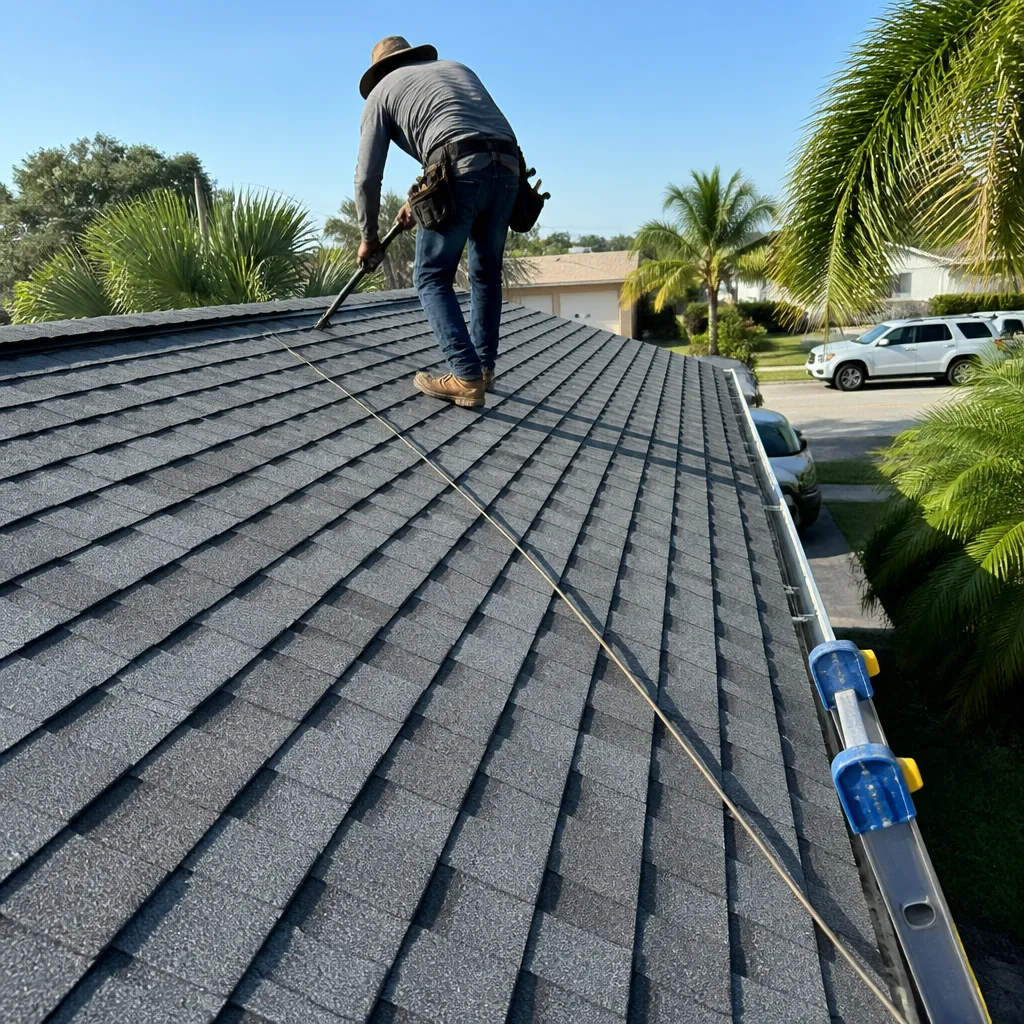 After
After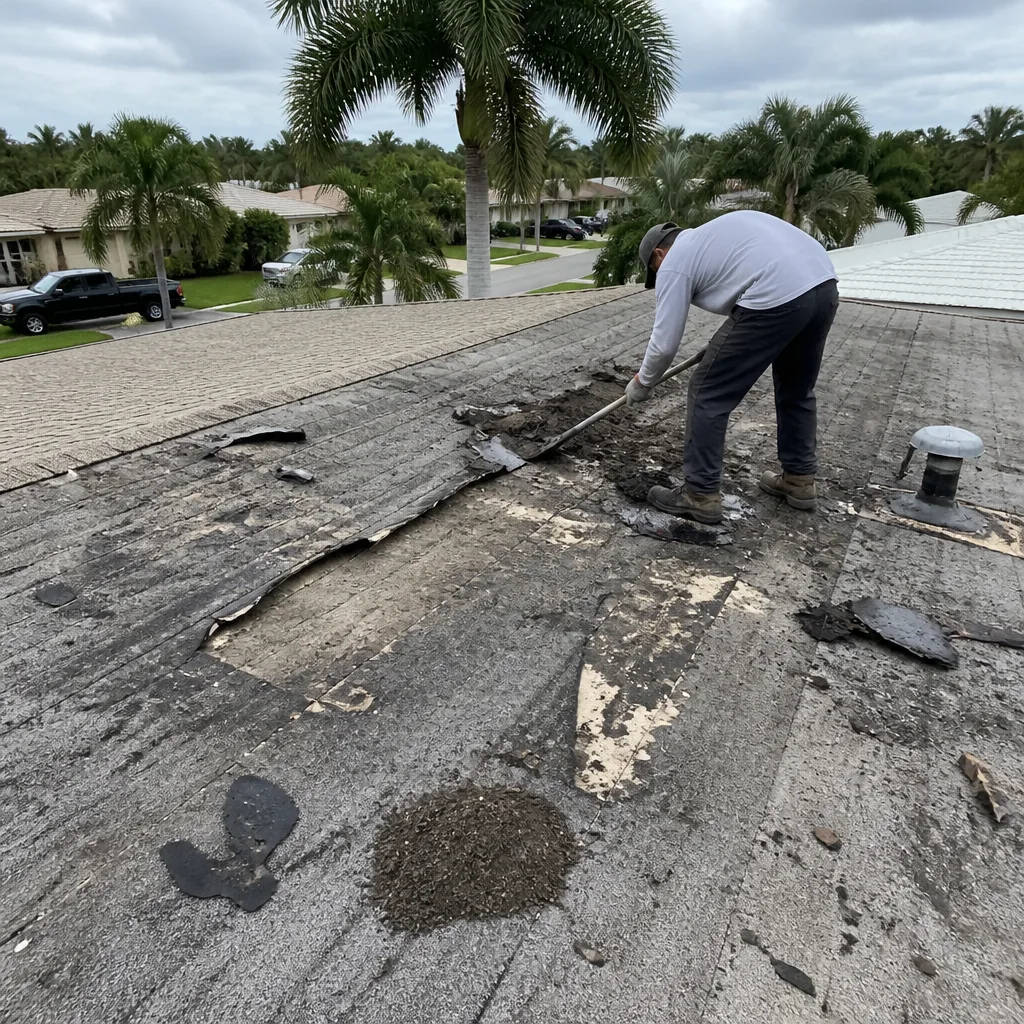 Before
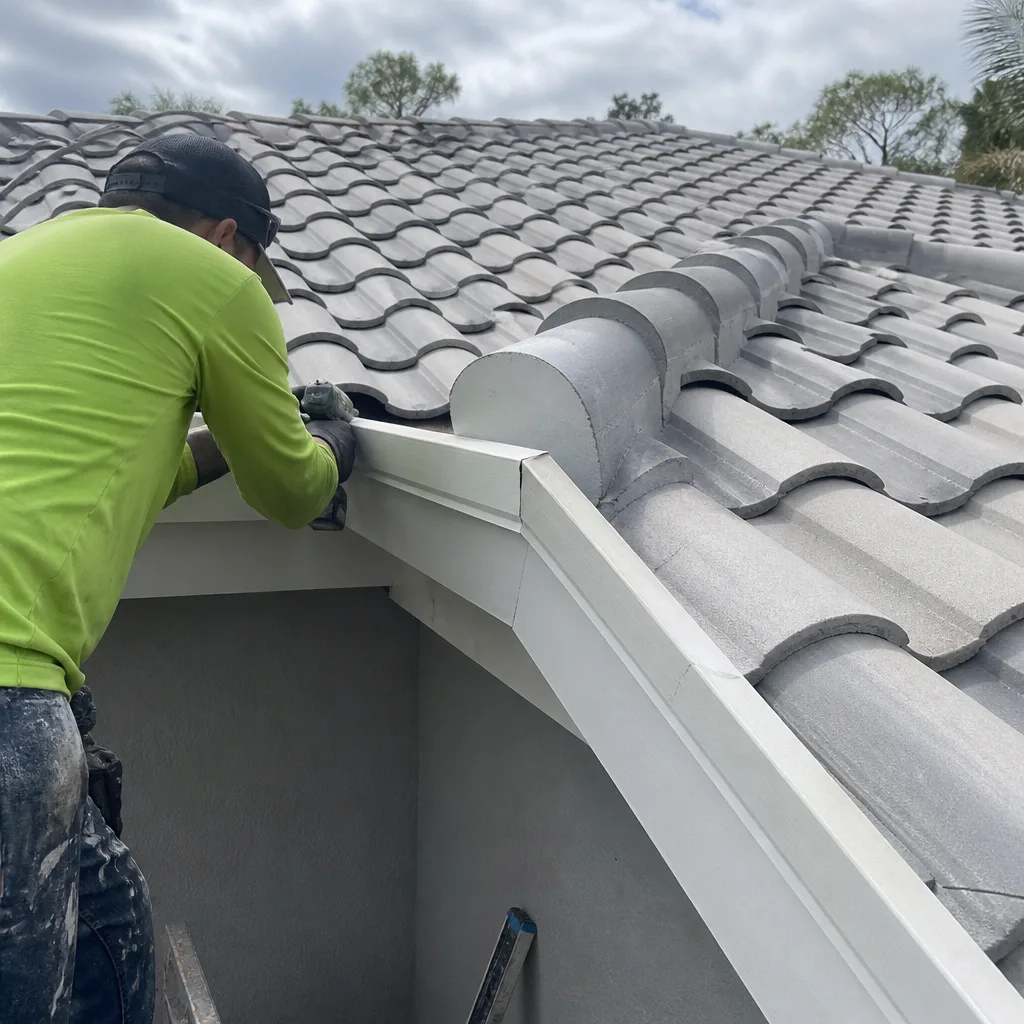 After
AfterWhen to Call a Professional
You should call a licensed roofer for any project that crosses the 25% threshold, touches the decking, or involves structural repair. These are not weekend projects, and the permitting process assumes a licensed contractor of record. A homeowner pulling their own roofing permit in Broward County is legally allowed in limited cases, but it shifts full liability for code compliance onto the homeowner, and most insurance carriers won’t extend the same coverage posture to a self-permitted roof. If a past contractor skipped the permit and you need a retroactive solution, that’s also a call to a professional, because the fix usually involves opening the roof to verify what’s underneath. Tilehurst Roofing Fort Lauderdale offers free estimates in Fort Lauderdale, and the written price includes the permit fee, the inspection schedule, and the guarantee in plain language. Call (754) 732-9325 and we’ll walk the roof, check the permit history, and tell you exactly where you stand.
Frequently Asked Questions
Yes, a full roof replacement in Fort Lauderdale requires a Broward County or City of Fort Lauderdale building permit, issued before any tear-off begins. The permit triggers mandatory inspections at the decking, dry-in, and final stages. Without a finaled permit, your roof is unpermitted work with all the insurance and resale consequences that follow.
Most residential roofing permits in Broward County and Fort Lauderdale run between $150 and $450, based on the job’s total contract value, with additional city surcharges in Fort Lauderdale. It’s a line item in your written price, and any contractor who buries it or waives it is not pulling one.
Your insurance carrier can deny or reduce a future roof claim because there’s no inspection record verifying the roof was built to code. When you sell, an unpermitted roof can derail the buyer’s financing and force you to pay for a re-roof with permits before closing. The fix is a retroactive permit inspection, which often requires opening sections of the roof to verify what’s underneath.
Search your property address on the Broward County ePermits portal or the City of Fort Lauderdale Building Services online system. Look for any roofing permits, their status (issued, in-progress, closed), and whether a final inspection is recorded. Open permits appear there, and so do missing records for older homes where permits were never filed.
Technically the county won’t accept a permit for work already underway without special review, and a contractor who starts without a permit is violating the code. The correct sequence is permit issuance, then work. If your contractor already started and “will get the permit tomorrow,” that’s a compliance problem the county treats seriously.
The 25% rule says roof repairs affecting less than 25% of the total roof surface within any 12-month period are treated as repairs rather than a full re-roof, meaning no complete re-roof permit is required, though the repair must still meet code. Cross 25% and the entire roof must be brought to current code, including decking and underlayment requirements. Call (754) 732-9325 for an exact assessment of where your roof falls under the rule, and whether your planned repair triggers a permit.
The Bottom Line
Roofing permits in Fort Lauderdale and Broward County are not optional extras. They’re the legal and financial backbone of your roof: they prove code compliance, keep your insurance claim viable, and let you sell your house without funding a second roof at the closing table. The process is knowable and checkable, and the contractors worth hiring treat it as standard practice. For more guides & resources, visit our blog. Verify the permit before work starts, confirm the inspections as they pass, keep the final sign-off with your deed, and never accept “you don’t need one” in writing only. A roof is the most expensive component of your home that only has to work when everything else is going wrong. The paper trail is what makes it work in a claim, a sale, and a storm.
Written by Greg Holloway, Owner at Tilehurst Roofing Fort Lauderdale, serving Fort Lauderdale since 2000.